


Childhood Responsibilities by Age

Childhood Responsibilities by Age
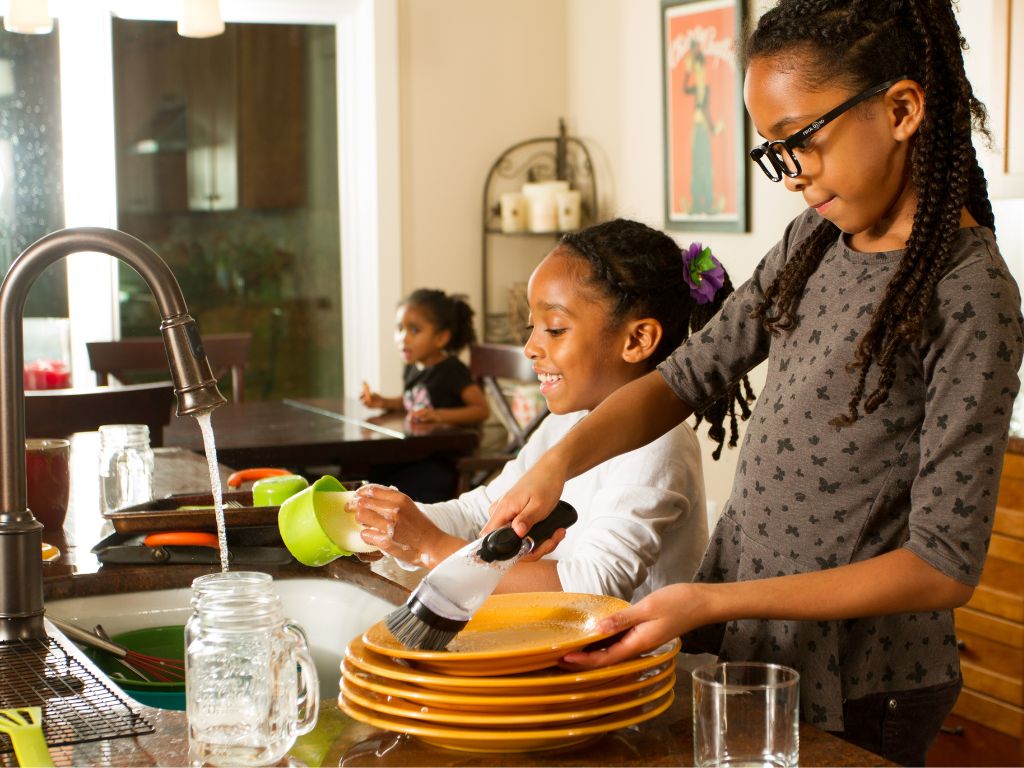

Age-Appropriate Responsibilities to Help Your Child Grow and Thrive
(not an extensive list)
There’s often conflicting advice about childhood responsibilities – when and how much they should have. On one side, we hear: “Kids need responsibilities! It helps them build self-esteem, develop life skills, contribute to the family, and prepares them for independence.” On the other side: “Let kids be kids! They have their whole lives to worry about chores.”
The truth is, childhood is a time of wonder and discovery — a chance to explore how the world works and to start finding their place in it. At its heart, childhood is preparation for adulthood. And if you’re anything like me, you probably hope to raise future adults who can do more than microwave mac ’n’ cheese. Ones who know that outside shoes don’t belong on the bed — and who understand the very real importance of cleaning a toilet properly. (Yes, those were real-life college roommate moments.)
Beyond the practical life lessons, giving kids responsibilities helps them grow, learn, and feel proud of the new skills they master along the way.
Here’s a helpful list of age-appropriate responsibilities to get started:
Responsibilities for Toddlers
(Walking – 2 yrs)
- Keeping their bodies safe and using their bodies appropriately: “Gentle hands, inside voices.”
- Cleaning up their own messes: “You spilled the milk. Please get the towel and clean it up. I’ll help you.”
- Dressing themselves: make season-appropriate clothing accessible on a lower bar in the closet.
- How much food they eat and how they choose to feed themselves.
- Cleaning up their toys: labeled bins and a place for everything greatly supports the clean-up process for toddlers.
- Light cleaning: wiping, sweeping and dusting surfaces, throwing things away, putting things away, etc.
- Light laundry: they can sort colors, towels, etc.
Responsibilities for Preschoolers
(3yrs – 5 yrs)
All from the previous slide, plus:
- Taking care of their closets: properly hanging, folding, and storing their own clothes.
- Organizing their own rooms: will require parent support and consistency.
- Mealtime involvement: setting the table, clearing their place from the table.
- Friendships: Deciding who to play with.
Responsibilities for School-Aged Kids
(6yrs – 9yrs)
All from the previous slide, plus:
- School: in-school work, homework, preparing their backpack the night before.
- Time management: How they spend their time after responsibilities are completed.
- Community and Peers: what extracurricular activities they participate in.
- Preparing simple foods for snacks and lunches: sandwiches, fruit, sliced veggies, bowl of cereal, etc.
- Help prepare family meals: mix salad, slice bread, season meats, stir soups and sauces.
- Kitchen duties: emptying/loading dishwasher, washing/drying dishes, organizing flatware, keeping pantry organized and clean.
- Participate in grocery shopping.
- Fold their own laundry.
- Dusting and daily tidying.
- Travel: Help make list and pack suitcase for trips.
Responsibilities for Tweens
(10yrs – 12yrs)
All from the previous slide, plus:
- Packing school lunch.
- Self-grooming: nails, hair, etc.
- Differentiation: Being safe in their neighborhood without adult supervision.
- Staying alone in the home: with certain rules about who can be with them. *Check state laws on specific ages. Child must be emotionally mature enough regardless of age.
- Doing their own laundry independently.
- Household help: mow the lawn, garden, wash cars, shovel snow, rake leaves, cleaning bathroom, etc.
Responsibilities for Adolescents
(13yrs – 15yrs)
All from the previous slide, plus:
- Waking themselves up in the morning: be prepared to support this process, especially if they have early mornings.
- Independently using public transportation.
- Safely being in the community with friends: movies, golfing, bowling, restaurants
- Earning personal money with odd jobs: babysitting, mowing lawns, housework, washing cars, flipping pizzas.
- Budgeting their own spending.
- Babysit younger siblings or neighbors kids.



Newsletter
Be the first to know when new resources become available.
Follow Us :